
Sunday, April 20, 2014

Wednesday, April 16, 2014

USedchat Is Powerful Forum for Education Reform
By Mark Barnes
A Twitter chat can be a daunting endeavor. When hundreds of people tweet at the same time to the same hashtag, the pace moves at what sometimes seems like Formula I speed.
When the tweets are aggregated by a third-party app, like Storify, they are saved for posterity, creating a fascinating record of often amazing content.
This Storify captures the USedchat, where I was one of four moderators, along with many other progressive-minded educators, discussing changes and trends in education.
Please add to the discussion in the comment section on this post.

Mark Barnes is an education author, consultant and the publisher of Brilliant or Insane. Learn more about Mark on our Team page. Follow him on Twitter here.
 |
| Storify pic via @jennifer_hogan |
When the tweets are aggregated by a third-party app, like Storify, they are saved for posterity, creating a fascinating record of often amazing content.
This Storify captures the USedchat, where I was one of four moderators, along with many other progressive-minded educators, discussing changes and trends in education.
Please add to the discussion in the comment section on this post.
Mark Barnes is an education author, consultant and the publisher of Brilliant or Insane. Learn more about Mark on our Team page. Follow him on Twitter here.
Thursday, April 10, 2014

5 Things I Think About Twitter After 25,000 Tweets
By Mark Barnes |
| via Twitter.com |
Soon, I'll surpass 25,000 tweets. This got me thinking about Twitter. Here are 5 things I thought:
- I Tweet a lot: The average number of tweets sent by a user on Twitter is 307 according to DMR. Considering more than 100 million people are active Twitter users each month, I was astonished by this statistic. It makes my 25K really cool, or it means I have far too much time on my hands.
- 6,000 people make for a lot of friends: For a couple of years now, I've been actively attempting to build my Twitter following. At roughly 6,000 followers, I used to feel sort of lonely. After all, I know educators who have more than 100,000, which is staggering, I think, for someone who is not a celebrity. Then, when I reviewed the stats on DMR, I realized that the average Twitter user has a paltry 208 followers. Suddenly, it seems like I'm standing in a very large crowd. Thanks PLN.
- It's okay to seek out new friends: For a long time, my connection philosophy was: "If you tweet it, they will come." I shared lots of content and waited for followers. Sure, I gained a couple of thousand loyal friends, but then my connections stagnated. I realized not so long ago that seeking out interesting people and following them first is sort of like handing out a business card. You'll be surprised how many people follow back. This reciprocation is what puts the "social" in social media.
- Cyber friends can be real friends: When I started using Twitter, it was nothing more than a promotional tool, and the people there were nothing more mythical figures, locked in my computer monitor. Now, I have made numerous friends from Twitter, whom I have met at conferences, dined with and collaborated with on various projects. This is the best part of Twitter.
- Mixed in those 25,000 tweets is some compelling conversation: While there are plenty of times I tweet a link to something and there is little follow-up, sometimes a simple statement or link sparks a very interesting debate, like this one.
How often do you tweet, and what do you think about Twitter?
Mark Barnes is an education author and consultant and the publisher of Brilliant or Insane. Learn more about Mark on our Team page. Follow him on Twitter here.
Monday, March 31, 2014

7 Best Posts of March 2014
 |
| via TeachThought |
- 6 Ways to Energize Your Lessons: Our education expert, Reed Gillespie, continued to engage readers, with these hot tips.
- 10 Ways Social Media Will Transform Your School: Mark Barnes shares ways that social media is impacting the classroom more than ever.
- LeBron James Is Coming Back to Cleveland: This intriguing post includes a hypothetical conversation between Cavaliers owner, Dan Gilbert, and James. Do you think it happened?
- 5 Things Ellen Degeneres Did to Save the Oscars: If a show ever needed saving, this four-hour epic did, and the hilarious comedian came through. You won't believe how she did it.
- Olympic Gold Medalists to Headline Dancing with the Stars: New Brilliant or Insane editor, Anna Turner, adds her typical pizzazz to this interesting post.
- A Winning Idea Born from Losing, Much Losing: Cleveland blogger, Zach Fenell, shares this entertaining story about a man chronicling a lifetime of suffering as a Cleveland sports fan.
- Twitter, Facebook, Google or Pinterest? We are there: Readers love this quick-reference social media address book for Brilliant or Insane.
So, which is your favorite post?
From Brilliant or Insane staff reports
Wednesday, March 5, 2014

10 ways social media will transform your school
 |
| via isc.wisc.edu |
Little did I know that this single assignment, engaging students with an online message board, would forever change instruction.
Virtual transformation
Social learning is a critical part of the 21st-century classroom. If you've hesitated to use social networks in your classroom, consider these 10 ways that social media will transform your school.
- You'll see unbridled engagement -- Ask your students to take out pencil and paper, and they will cringe. Tell them to prepare to discuss something on Twitter or Todaysmeet room, and every student will participate.
- You can teach appropriate use -- Students will never read three-page Acceptable Use Policies, filled with Do's and Don'ts. Ask them to take out their devices, and start a discussion on how to appropriately use social media, and they'll embrace appropriate use immediately.
- It will help you teach digital citizenship -- Our students are digital citizens, but this birthright doesn't mean they're good citizens. Social media use will help hone the skills and responsibilities that come with using social networks.
- You can all share powerful information -- Social media is about sharing, so why not share classroom content for learning around your school and around the world.
- It builds a classroom of curators -- The 21st century is about content curation. Nothing encourages this more than social media.
- It encourages autonomy -- With multiple platforms and so much content to share, students can choose what they curate and which platforms to use. This autonomy will make them independent learners, eager to teach others.
- It will make your students writers -- You can throw out your worksheets and workbooks. Social networks make students writers. With mini lessons from you on appropriate style and diction, the platforms will do the rest.
- Your students will become avid readers -- Break out The Great Gatsby and you're likely to lose more than half of your students. That goes for the science text, too. Let your students find a favorite book on Figment or an article on Issuu, and they'll read until you make them stop.
- Students will become creative geniuses -- With social networks like Vine and Padlet, students can share their creativity, while also learning your subject matter.
- It manages your content -- With a social network like Edmodo, Schoology or even Facebook, you can manage all of your students' content and social sharing in one place. This is not the best way to engage in social media, but it will work and the kids will still love it.
Monday, March 3, 2014

Twitter, Facebook, Google or Pinterest? We are there

We love social media (who doesn't?). So, we've joined all of the major social networks, in order to make our content easily accessible for you.
Please friend, follow, pin, tweet, retweet, vine, revine and anything else that is appropriate. Here are some quick links to Brilliant or Insane on your favorite social media:
On Twitter - @readwriterant
On Facebook - Facebook.com/brilliantorinsane
On Pinterest - pinterest.com/source/brilliant-insane.com
On Google+ - Brilliant or Insane Google page
On Vine - Brilliant-insane.com
Be sure to let your friends know, so you and they never miss a post.
Posted by the Brilliant or Insane team
Saturday, February 8, 2014

Facebook Paper is revolutionizing how we curate content
 |
| via: DigitalTrends.com |
Sure, I use Facebook, because it's a necessary social network, and I am a content curator -- that is, someone who creates, maintains and shares a ton of information across many platforms. So, because my friends and colleagues like Facebook, I use it.
Still, I've always believed Facebook to be an incredibly clunky tool. It took hours one day just to learn how to set up folders and arrange pictures, and I'm a pretty tech savvy guy.
For the longest time, it's bothered me that the world's largest information source couldn't figure out the simplicity of sharing content. Why hadn't Mark Zuckerberg and his minions followed in the footsteps of Twitter, Feedly and Flipboard -- social networks that sport remarkably clean, user-friendly platforms.
Although Facebook may still have features I don't love (why doesn't Facebook automatically size pics and banners to fit?), all is forgiven, thanks to the recent launch of Facebook Paper.
Arguably the most user-friendly, aesthetically-pleasing, downright cool content curation tool ever created, Paper is a true game changer.
Not only can you interact with Facebook the old way, you now can pull in content from a myriad of sources around the Internet in just about any subject you wish.
Scared of change? Worried you won't know how to use Paper? Don't worry; a sexy woman (just an automated voice, really) will tell you exactly what to do, with every swipe. It took me all of about three minutes to download Facebook Paper, learn how to navigate, add my desired content and start, reading, liking and sharing.
Facebook Paper is more than just a social network. It's the new generation of content curation.
Mark Barnes is an education author and consultant and the publisher of Brilliant or Insane. Learn more about Mark on our Team page. Follow him on Twitter here.
Friday, February 7, 2014

How to use Pinterest in the classroom
Kids love social media. Ask them to ignore it in school, and they'll likely use it behind your back.What if you invited students to use a tool like Pinterest for learning? This infographic illustrates 16 uses for Pinterest in education, organizing those uses into four quadrants.
Notice the quadrant called, Allow Students to use Pinterest. What do you think?

Find more education infographics on e-Learning Infographics
Mark Barnes is an education author/consultant and the publisher of Brilliant or Insane. Learn more about Mark on our Team page. Follow him on Twitter here.
Tuesday, February 4, 2014

Top 5 Super Bowl social media blurbs
Social media is cool on so many levels. Twitter, Facebook and Instagram are all amazing tools for professional and personal purposes.
Admittedly, I use them more for the professional benefits, but I do enjoy the personal stuff, and occasionally, it provides excellent fodder for blog posts.
The day after the Super Bowl, which saw Peyton Manning's Denver Broncos suffered a brutal beating at the hands of NFC champ Seattle, the social networks were rife with heartrending and hilarious commentary about the game.
There were hundreds of Brilliant and Insane shares. Here are our top 5 2014 Super Bowl social media blurbs.
- "oh my god RT @barkbox: Interception, Peyton Manning. #ruhroh (see picture above)
- Bronco defensive end Shaun Phillips' son texted, "It's ok daddy u r still my hero."
- "My pee wee team tackled better than the Broncos. But wait, it's Manning's fault."
- "If I were running sound for the Super Bowl, I'd just have Flea take a bass solo for the entire game."
- Peyton Manning saw his shadow yesterday on Groundhog Day. Unfortunately, the shadow picked him off too."
Friday, January 31, 2014

Buy or Sell Facebook Paper?
The way we share information is changing. Reading stories, personal anecdotes and even viewing videos from a Facebook news feed is as second nature for most people as pouring a morning cup of coffee.As of February 3rd, your Facebook news page will have a dramatically different appearance.
 |
| via: TechCrunch |
Following in the steps of Flipboard, Feedly and other popular magazine-type services, Facebook's Paper will look and even feel different.
Buy or Sell Paper?
I'm buying Facebook's Paper and can't wait for the new platform to launch. There's nothing more aesthetically pleasing in the digital world than a magazine-like app that makes every story and picture stand out.
If you use Facebook on a mobile device, you're sure to love this style. Navigation is easier than ever, and each share and story will fill your device for a more enjoyable reading experience.
Plus, I may be in the minority, but I've always felt Facebook was a bit clunky in it's current format. I guess I've always expected more. Hopefully, I'm about to get it.
Friday, January 24, 2014

Facebook, YouTube and Twitter just might be the best teachers on Earth
While policymakers attempt to fix education with standardization and testing, it's quite possible that the real solution may be hidden in the astonishing numbers in this infographic, created by Adobe.

The graphic shows total profiles for all major social networks, as of December, 2013. So, you may wonder, where is the fix for education?
If most people on the planet use social media, this makes a fairly transparent statement about how we communicate and how we learn. Still, most schools have barely scratched the surface, in terms of integrating social media into daily teaching and learning.
Social media in action
Of the major social networks, YouTube likely plays the largest role in lessons and activities. Because it is a visual medium, it's easy to share a video and springboard off of it.
With the staggering use of these tools, one must wonder why Facebook, Twitter, Instagram and other powerhouse social platforms aren't playing similar roles. If 1 billion students were carrying a particular math book, that text would be used in every class worldwide.
With most of our students using Facebook, Twitter, Pinterest, Instagram and other social media, isn't it quite possible that these are the best teachers on Earth?
If so, why aren't we using them?
Tuesday, January 14, 2014

Is Google breaching your privacy with new Gmail policy?
If you are a gmail or Google+ user, you probably received the following email from Google.
Even though Google claims your email will not be revealed unless you want it to be, many people are upset by this move, fearing their privacy is in danger.
From my point of view, I don't mind people having my email, but I'm an author and speaker, so privacy isn't something I worry about.
Does Google's new policy upset you?
Monday, January 13, 2014

Buffer makes you a social networking machine
 |
| via Bufferapp.com |
Psst., here's a little-known secret: I don't share content to Twitter, Facebook, LinkedIn and Google+ 24/7. Sure, it looks that way, because I send information to these social networks 50-60 times a day. Don't worry, I'm not strapped to my iMac or iPhone.
It's a trick that I perform with an amazing tool -- Buffer.
Buffer is a powerful application that allows users to share content to multiple social networks with a single click. Best of all, you can schedule unlimited shares as many days of the week as you like.
How does it work?
If you are in business, it's easy to see the value in sharing information to social media. If you are an educator, imagine scheduling updates for parents and students at regular intervals.
You could fill your buffer once weekly, and the job is finished.
Take a look at the video above. Then, if you want to become a social networking machine, give Buffer a try.
Beware, though, Buffer is addicting.
Mark Barnes is an education author, EdTech guru and the publisher of Brilliant or Insane. Learn more about Mark on our Team page. Follow him on Twitter here.
Friday, January 10, 2014
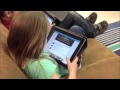
Who says Twitter isn't for elementary students?
Many teachers are reluctant to use social media tools, like Twitter, in the classroom. Some elementary teachers might love the idea but believe their students are simply too young for social media.Check out this video and witness the power of Twitter in a first-grade classroom.
If this looks like something you'd love to have your youngsters try, don't worry about getting them accounts. Just set up a class Twitter handle, like Mrs. Cassidy did. Have students log into that account and add their names to their tweets.
So, what do you think? Is this strategy brilliant or insane?
Monday, December 30, 2013

Chasing connections
In an effort to gain followers, friends and blog readers, I find myself chasing connections on social media more than ever before.I've spent a good portion of two days creating a Google+ page, which will house links to posts from this blog. The Brilliant or Insane Google page is located here.

So, I built the Brilliant or Insane Google+ page -- which is just an extension of this blog. Will it bring more readers here? Will it spark conversation? I really don't know.
Sometimes, I just feel like I'm chasing connections.
Is this a bad thing?
Sunday, December 15, 2013
Week in Review: Kidblog sparks dialogue
When news broke of education blog king, Kidblog.org, moving to a freemium platform (some features free, others available with a paid upgrade), it seemed that anyone using the product had an opinion. The Kidblog post was so hot, it sparked a follow-up. |
| via: tech.mn |
In case you missed any of the action, these posts and other hot topics are listed below in this Week in Review:
- Kidblog no longer completely free: Shocked to find a paid upgrade in my Kidblog dashboard, I spread the news of the change in this post.
- Kidblog CEO defends move to paid platform: When educators started commenting and sharing the news of my post about the big change, Kidblog's co-founder, Matt Hardy, weighed in, inspiring this post.
- Anti-homework movement is growing: Always a hot-button issue in education, this post was one of the most popular ever at The Results Only Learning Blog, so I cross-posted it here and found that its popularity has not dwindled.
- Your tweets are not your own: Inspired by an interesting video on the the dangers of social media in business, I followed up with this post.
- Buy or Sell Lebron James as NBA's all-time best player: The "best-all-time-player" is always a fun debate in any sport. Being from Cleveland, this one is especially interesting to me.
Enjoy these posts, comment if you wish and, as always, please pass them along to friends and family.
Wednesday, December 11, 2013

Your tweets are not your own!
Think about this disclaimer: "All tweets are my own." It's a popular declaration, used by people who fear retribution from an employer, based on something they post on Twitter or another social media platform. Podcasters Scott Stratten and Alison Kramer make some interesting points about this.If you're frightened by a 53-minute video, just scrub through to the 17:00 mark, where Stratten and Kramer expound on the statement, "All tweets are my own."
I imagine the disclaimer would be of little use to a teacher, who blogs or tweets or posts to Facebook something that an administrator sees as detrimental to the image of the district. In fact, the examples of educators being terminated for irresponsible posts to social media are legion, and one has to believe that many of them used the disclaimer, "my tweets (or posts) are my own."
While the realization may be sad, it's critically important to consider and understand that your tweets are definitely NOT your own!
Saturday, December 7, 2013

Tweet it, Like it, Pin it. Do we share too much?

I spent hours today surfing the Internet for the best blog sharing tools.
One of my mantra's for this blog is "new content 365 days a year." In fact, now that I work as a full-time writer and consultant, I have become obsessed with sharing new material on this blog.
I preach content curation in my keynote addresses and workshops, because I believe today's students are tomorrow's content curators.
Today definitely has me wondering, though, do we share too much? Do readers grow weary of our content?
Let me know what you think. Oh, and don't forget to share this post.
Mark Barnes is an education author and consultant and the publisher of Brilliant or Insane. Learn more about Mark on our Team page. Follow him on Twitter here.
Subscribe to:
Posts (Atom)